Learn
Taping Therapy for Sports Injuries in Kuwait: Benefits and Techniques for Faster Recovery
Nov 21, 2025
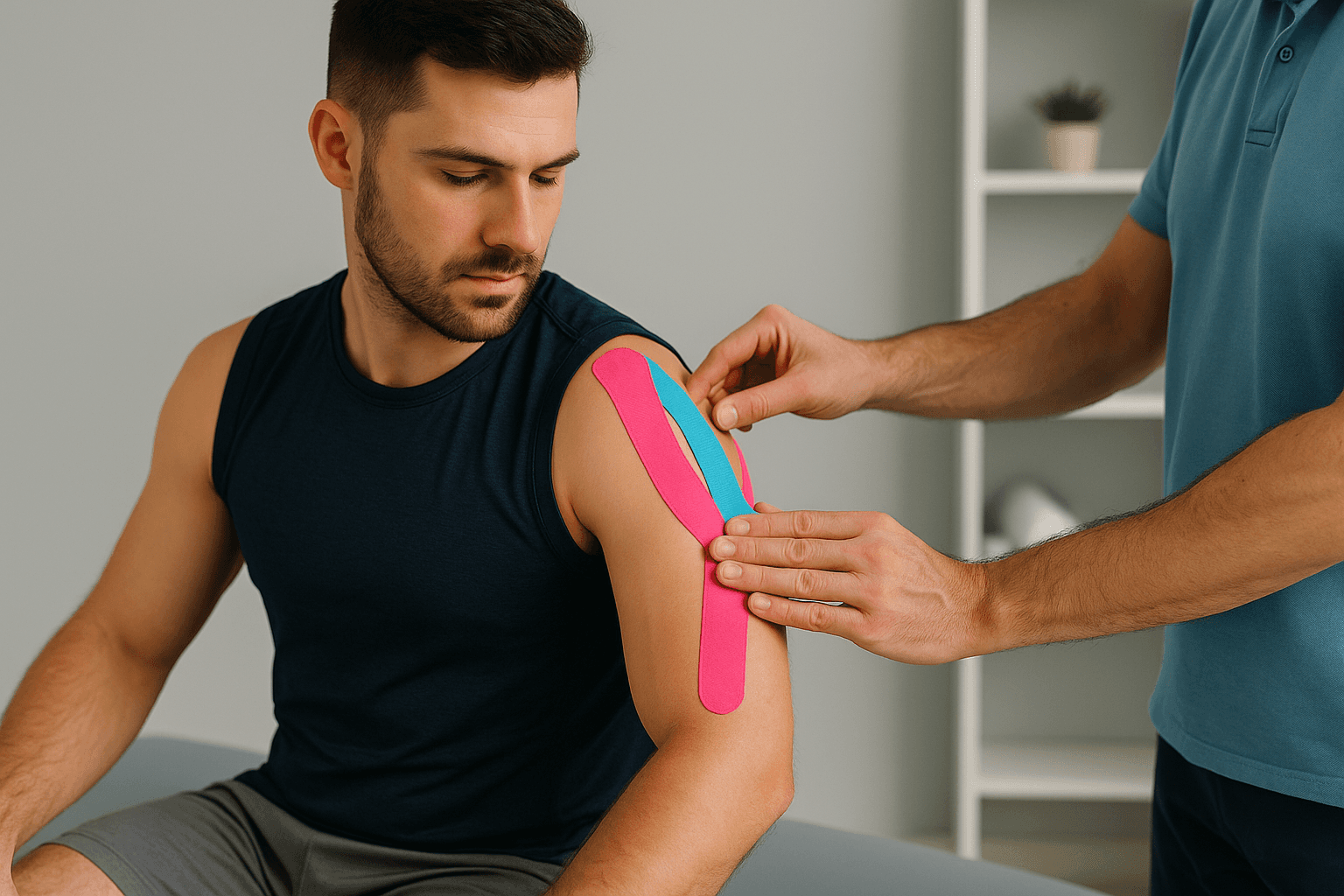
If you’ve ever walked into a gym in Kuwait and noticed people with colourful strips of tape on their knees, shoulders, or elbows—you’re not alone. Those strips aren’t for fashion. They’re part of something called taping therapy, and many people swear by how much it helps them move with less pain and more confidence.
Maybe you’ve had a similar moment: your knee acts up after football, your shoulder feels tight after training, or you’ve pulled something while working out. Suddenly, even simple movements feel uncomfortable. That’s usually when someone tells you, “Why don’t you try taping?” And honestly, it’s worth understanding what it can (and cannot) do.
Let’s break it down gently and in plain language, just the way a physiotherapist would explain it during a session.
What Exactly Is Taping Therapy?
Think of taping therapy—also known as kinesiology taping—as a supportive friend for your muscles and joints. It’s a flexible, stretchy tape that’s applied to the skin to help relieve pressure, reduce discomfort, and keep things supported without locking the body in place.
The key word here is support. Not restriction.
Unlike the old-school sports tapes that feel stiff, kinesiology tape moves with you. That’s why athletes love it. You can walk, stretch, climb stairs, play padel, or hit the gym, and the tape simply goes along for the ride.
Here in Kuwait, it’s becoming popular not only among professional athletes but also office workers with shoulder tension, runners with knee pain, and anyone dealing with minor injuries from everyday life.
One of my favorite examples is a patient who had recurring knee pain from football. Once we applied the tape correctly and combined it with strengthening exercises, he told me, “It feels like my knee finally remembers how it’s supposed to move.”
That’s exactly how taping works—subtle, supportive, and surprisingly effective when done right.
Why People Use Taping: Real, Everyday Benefits
Here’s what most people tell physiotherapists after trying it:
• “My pain feels lighter.”
Because the tape slightly lifts the skin, it eases pressure on sensitive tissues. It doesn’t cure the injury, but it can make movements feel less sharp or irritating.
• “I feel more stable.”
Whether it’s taping for knee pain or a shoulder issue, the tape acts like a gentle reminder for your body to move in a safer way. It’s almost like having a supportive hand on the area.
• “The swelling went down faster.”
The tape improves fluid circulation in swollen or inflamed areas—especially useful after ankle sprains or muscle pulls.
• “I’m more aware of how I’m moving.”
This one is underrated. Taping helps you stay mindful of posture and movement. People with rounded shoulders or lower back strain benefit a lot from this.
• “It helps me keep going without overdoing it.”
And that’s why so many active people use it—it lets them move safely while they heal.
How Taping Is Actually Done (And Why Technique Matters)
If you’re imagining someone just slapping tape on your skin… that’s not quite how it works.
A proper taping session usually looks like this:
1. You’re assessed first.
A physiotherapist in Kuwait will check:
how you move,
where the pain is coming from,
whether it’s muscular, ligament-related, or posture-related.
The tape is only as good as the assessment behind it.
2. The skin is prepared.
Clean, dry skin helps the tape stay in place, especially in Kuwait’s warm weather.
3. The right tape is chosen.
There’s elastic kinesiology tape, rigid sports tape, lymphatic tape, and more. Each one has a different purpose.
4. Tape is applied with purpose.
Depending on your injury, the tape can be:
stretched lightly,
stretched a lot,
or not stretched at all.
The shape matters too.
For example:
A Y-strip helps shoulder muscles activate properly.
A fan strip reduces swelling.
An I-strip supports knee tracking.
5. You try moving after taping.
Your physiotherapist will ask you to bend, walk, or lift your arm to make sure the tape feels comfortable and supportive—not tight or restrictive.
FAQs People in Kuwait Commonly Ask About Taping
1. Does taping therapy hurt?
Not at all. Most people forget it’s even there after a few minutes.
2. Can I apply it myself after watching YouTube?
For simple issues, maybe. But for sports injuries or recurring pain, it’s much safer to let a physiotherapist guide you. Placement and tension matter more than people think.
3. How long can I keep the tape on?
Usually 3–5 days. It’s fine to shower with it; just avoid scrubbing directly over the tape.
4. Will taping cure my injury?
Taping helps, but it’s not a standalone treatment. It works best when paired with physiotherapy exercises, manual therapy, and proper rest.
5. Is taping safe for teenagers, older adults, or people with sensitive skin?
Yes—your therapist will choose the right tape and method for your skin type and age.
A Gentle Final Note
If you’re dealing with a sports injury—or even just discomfort that keeps coming back— taping therapy in Kuwait may be a helpful part of your recovery. It won’t “fix” everything by itself, but it can make movement easier and healing smoother.
The safest and most effective approach is always to speak with a licensed physiotherapist who understands your body’s needs and can guide you through a proper recovery plan. Many patients in Kuwait trust Revive Center for taping therapy, sports injury rehabilitation, and long-term pain management. Their therapists blend modern techniques with personalized care to help you move with confidence again.
You deserve to move without fear, discomfort, or hesitation. Taping might just be one of the tools that helps you get there.
Disclaimer
This blog is for educational purposes only and is not a substitute for medical advice. Always consult a licensed physiotherapist or healthcare professional before starting any taping therapy, exercise routine, or injury treatment—especially if you have ongoing pain, sudden severe symptoms, or an existing medical condition.
References:
1. World Health Organization (WHO) – Musculoskeletal Health
https://www.who.int/health-topics/musculoskeletal-health
2. National Health Service (NHS) – Kinesiology Taping & Sports Injuries
https://www.nhs.uk/conditions/sports-injuries/
3. National Athletic Trainers’ Association (NATA) – Position Statements & Taping Guidelines
https://www.nata.org/practice-patient-care/health-issues/position-statements
4. Journal of Sports Medicine (via PubMed) – Effects of Kinesiology Tape on Muscle Function
https://pubmed.ncbi.nlm.nih.gov/25108211/
5. American Physical Therapy Association (APTA) – Physical Therapy Resources
https://www.apta.org/patient-care/interventions/kinesiology-taping
6. PubMed – Systematic Review: Kinesio Taping in Musculoskeletal Rehabilitation
https://pubmed.ncbi.nlm.nih.gov/30072441/